
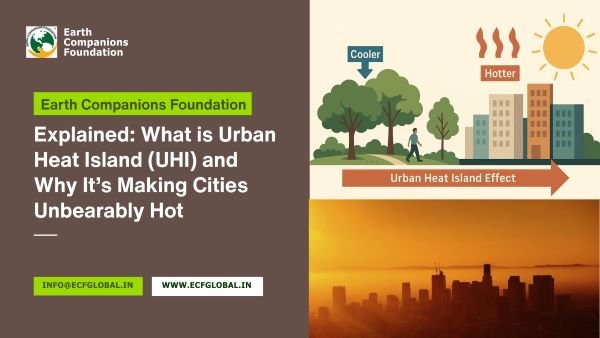
If you’ve ever stepped out of an air-conditioned room into a city street and felt like you’ve walked into a furnace, you’ve already experienced the Urban Heat Island (UHI) effect. It’s not just “garmi zyada hai” — it’s a scientifically proven phenomenon that is quietly turning cities into heat traps.
Let’s break it down in a simple, no-jargon way.
What is Urban Heat Island (UHI)?
An Urban Heat Island (UHI) refers to a situation where urban areas (cities) experience significantly higher temperatures than surrounding rural areas.
In simple terms:
👉 Cities become “heat islands” surrounded by comparatively cooler regions.
This temperature difference can range from 2°C to 7°C, and in extreme cases, even higher — especially during summers.
Why Does Urban Heat Island Happen?
Cities are designed for convenience, not climate. And that’s where the problem begins.
1. Concrete Jungle Effect
Materials like cement, asphalt, and bricks absorb and retain heat during the day and release it slowly at night. Unlike soil or grass, they don’t cool down quickly.
👉 Result: Nights in cities remain unusually hot.
2. Lack of Green Cover
Trees naturally cool the environment through shade and evapotranspiration (yes, big word — basically, plants releasing moisture into the air).
But urban areas?
👉 More buildings, fewer trees.
3. Heat from Human Activities
Cars, ACs, factories, generators — everything emits heat.
Ironically:
👉 The more we try to cool ourselves (ACs), the more heat we add outside.
4. Poor Urban Planning
Narrow roads, closely packed buildings, and lack of ventilation trap heat.
Think of it like:
👉 A pressure cooker with no steam outlet.
Urban Heat Island in India: A Growing Concern
Cities like Mumbai, Delhi, Ahmedabad, and Hyderabad are already facing intense UHI effects.
In Mumbai, rising concrete structures and coastal humidity create a deadly combination. Even nights offer little relief.
According to climate studies, Indian cities are warming faster than rural areas, making UHI a serious public health and environmental issue.
Effects of Urban Heat Island
This isn’t just about feeling uncomfortable. The consequences are serious.
1. Health Risks
- Heat strokes
- Dehydration
- Respiratory issues
- Increased mortality during heatwaves
Vulnerable groups like elderly, children, and outdoor workers are most affected.
2. Increased Energy Consumption
More heat = more AC usage
More AC usage = more electricity demand
👉 This creates a vicious cycle of heat + energy + emissions.
3. Air Pollution Worsens
High temperatures speed up chemical reactions in the air, increasing pollutants like ozone.
4. Water Stress
Higher temperatures lead to faster evaporation, increasing water demand and scarcity.
Urban Heat Island vs Climate Change: Are They the Same?
Short answer: No, but they are connected.
- Climate Change = Global temperature rise
- Urban Heat Island = Local temperature rise in cities
But here’s the twist:
👉 UHI amplifies climate change effects in urban areas.
So when a heatwave hits, cities feel it more intensely than rural areas.
Real-Life Example: Why Cities Feel Hotter
Imagine two places:
- A village with trees, soil, and open land
- A city with roads, buildings, and vehicles
Even if both receive the same sunlight, the city will feel hotter because it stores and re-emits heat, while the village allows heat to dissipate naturally.
Also Read: Section 51A of the Indian Constitution: How It Empowers Indians to Protect the Aravalli Range
Solutions: How Can We Reduce Urban Heat Island?
Now comes the important part — fixing the problem.
1. Increase Green Cover
- Plant more trees
- Develop urban forests
- Promote vertical gardens and green roofs
Even a small park can significantly reduce local temperatures.
2. Cool Roof Technology
Using reflective materials or white paint on rooftops helps bounce sunlight back.
👉 Simple, affordable, and highly effective.
3. Better Urban Planning
- Wider roads
- Open spaces
- Ventilation corridors
Cities need to be designed for airflow, not just real estate.
4. Reduce Heat Emissions
- Promote public transport
- Use energy-efficient appliances
- Shift to renewable energy
5. Water Bodies Revival
Lakes, ponds, and rivers help cool surrounding areas.
Unfortunately, many urban water bodies are either polluted or encroached.
What Can You Do as an Individual and as a Green Ambassador?
Yes, you can make a difference.
- Plant trees or maintain greenery around your home
- Use energy-efficient appliances
- Avoid excessive AC usage
- Opt for public transport or carpooling
- Support sustainable urban initiatives
Small steps, but big impact.
Why Urban Heat Island Needs Urgent Attention
Urban Heat Island is not a “future problem.” It’s already here.
With rapid urbanization, especially in countries like India, the problem is only going to get worse.
Ignoring it means:
👉 Hotter cities
👉 Higher health risks
👉 Increased energy bills
👉 Lower quality of life
Final Thoughts
Urban Heat Island is a classic example of how human development, when done without environmental balance, backfires.
Cities were meant to improve life. But without sustainable planning, they are slowly becoming heat traps.
The solution isn’t complicated — it’s about bringing nature back into cities.
Because at the end of the day:
👉 A city that breathes green, stays cool.
For More, follow us on Instagram – ECF Global or Become a Green Ambassador – Hit the Contact Us Page or email us at info@ecfglobal.in